
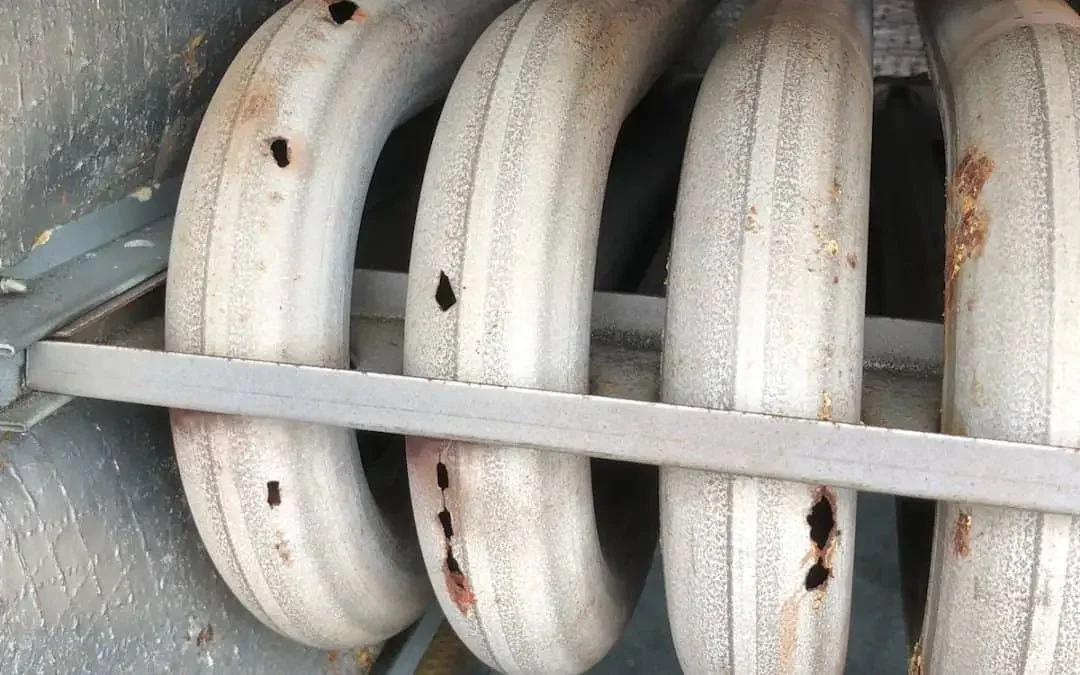
Broken heat exchanger
Most homeowners think winter heating problems only appear at the start of the season. The unit turns on, heat comes out, no strange noises—case closed.
Not quite. By mid to late winter, we often see a second wave of issues that don’t announce themselves loudly but can quietly shorten a heating system's lifespan or compromise safety.
Here’s what tends to get overlooked.
1. Restricted Airflow After Weeks of Use
Filters clog faster in winter than people expect. Doors stay closed, windows stay shut, pets spend more time indoors, and airflow slowly drops.
The heater still runs—but now it runs hotter, longer, and under more stress.
This can lead to:
Overheating
Premature shutoffs
Cracked heat exchangers over time
A system doesn’t need to fail to be damaged.
2. Exhaust and Intake Blockages
Winter weather changes the environment around your home. Debris, nests, and even heavy moisture can partially block exhaust or intake pipes.
The scary part?
You often won’t notice—until efficiency drops or a safety switch trips.
This is one reason carbon monoxide issues tend to spike after the cold has settled in.
3. “Short Cycling Isn’t Normal Winter Behavior.”
Many homeowners notice their heater turning on and off more frequently and assume it’s normal because it’s cold.
Sometimes it is.
Often it isn’t.
Short cycling can point to:
Dirty sensors
Improper airflow
A system that’s slowly drifting out of spec
Left unchecked, it wears out components fast.
4. “It Works,” Doesn’t Mean “It’s Ready for the Rest of Winter.”
Heaters that barely made it through December often don’t make it through February cleanly.
Mid-season checkups aren’t about upselling—they’re about:
Catching stress before failure
Keeping utility bills from creeping up
Making sure safety systems are still doing their job
5. Winter Is Also When Planning Beats Panic
If your system is aging, winter is actually the best time to plan, not replace.
Planning now means:
No emergency decisions
Time to explore rebates or efficiency upgrades
Scheduling work on your timeline instead of during a breakdown
The Bottom Line
If your heater hasn’t been looked at since the start of winter, it hasn’t been ignored—but it hasn’t been checked either. A quiet system can still be struggling.
Staying ahead of winter problems is cheaper, safer, and far less stressful than reacting to them.